Losing a tooth changes more than your smile. It changes how you eat, how you speak, how you feel when you laugh in a room full of people. At Dentique, Dr. Rashmi Bhatnagar has spent 25+ years giving Phoenix-area patients back exactly what tooth loss takes away. This guide covers everything you need to know about dental implants in Phoenix, AZ, from the basics of how they work to what they cost in 2026, and why thousands of patients across Ahwatukee, Chandler, Scottsdale, Mesa, Gilbert, and Tempe trust Dr. B with their smiles.
What Are Dental Implants? A Plain-Language Guide for Phoenix Patients
A dental implant is a small titanium post placed directly into your jawbone to replace a missing tooth root. Think of it as an artificial root. Once it heals, a lifelike crown attaches to the top, and the result looks, feels, and functions like a natural tooth.
The science behind why implants work so well comes down to a process called osseointegration. Over roughly three to six months, the titanium post bonds directly with the surrounding bone tissue. The bone grows around and into the surface of the post, locking it in place more securely than any other tooth-replacement method available today. According to the American Academy of Implant Dentistry, implants have a documented success rate of up to 98%, which is why the dental community widely regards them as the gold standard for replacing missing teeth.
Here is what implants do NOT do: they don’t slip during meals or conversations. They don’t require adhesive pastes. They don’t accelerate jawbone loss the way removable dentures can. In fact, the opposite is true. The implant post stimulates the bone every time you chew, mimicking what a natural tooth root does, which preserves the structure of your jaw over time.
Whether you hear it called a tooth implant Phoenix patients are researching, an implant-supported crown, or simply a titanium dental implant, the underlying concept is the same. It’s the closest thing modern dentistry has to a natural tooth.
Types of Dental Implants Offered at Dentique by Dr.B
Not every missing-tooth situation calls for the same solution. Dr. B’s approach starts with your anatomy, your goals, and your overall oral health, and works forward from there.
Single-tooth Implants
Single-tooth implants are the most common. If you’re missing one tooth, a single titanium post topped with a custom crown replaces it without touching the healthy teeth on either side. No grinding down neighbours. No compromise.
Multiple Implants
Multiple implants serve patients who have lost several teeth in different areas of the mouth. Rather than a full arch replacement, individual implants are placed wherever gaps exist, each one functioning independently.
Implant-supported bridges
Implant-supported bridges are a smart middle ground. Instead of placing an implant for every single missing tooth in a span, two or more implant posts anchor a bridge that covers the gap between them. This approach uses fewer posts while still delivering a fixed, natural-looking result.
Full-arch / All-on-4 implants
Full-arch / All-on-4 implants are the solution for patients who are fully edentulous (have no remaining teeth) or whose remaining teeth are failing and need to come out. Four precisely angled implant posts support an entire upper or lower arch of teeth. The strategic angles allow the posts to engage denser bone regions, which means many patients can receive a full arch and a temporary restoration in a single appointment. It’s genuinely life-changing for the right candidate.
What sets Dentique apart from volume implant chains is that Dr. B personally handles the full treatment arc, from the initial assessment through final crown placement. There are no rotating associates. The plan designed at your first appointment is executed by the same set of experienced hands throughout.
Am I a Good Candidate for Dental Implants?
Most adults are candidates. The key eligibility factors are:
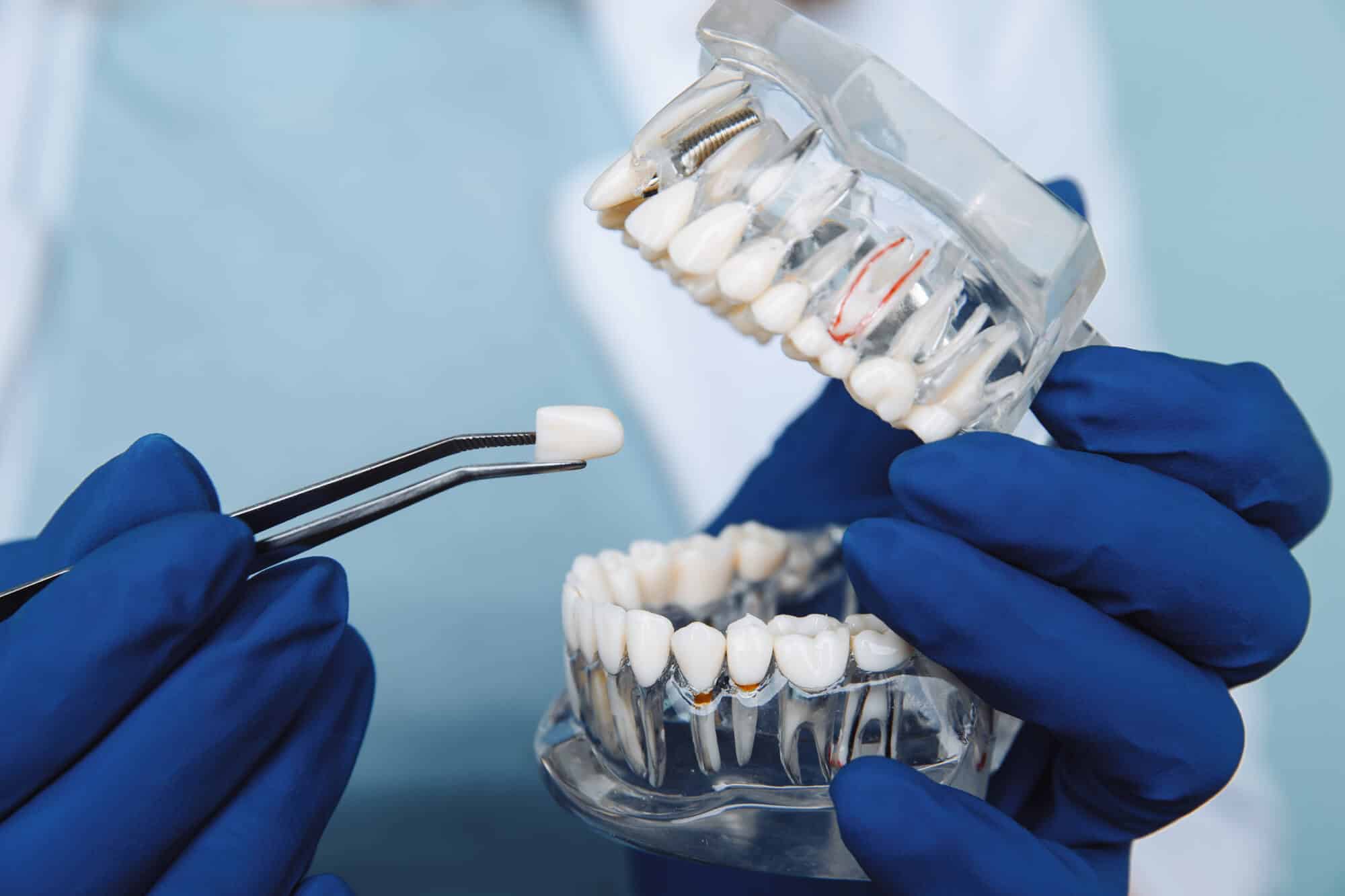
Sufficient jawbone density
Healthy Jawbone Density helps to anchor the implant post the procedure
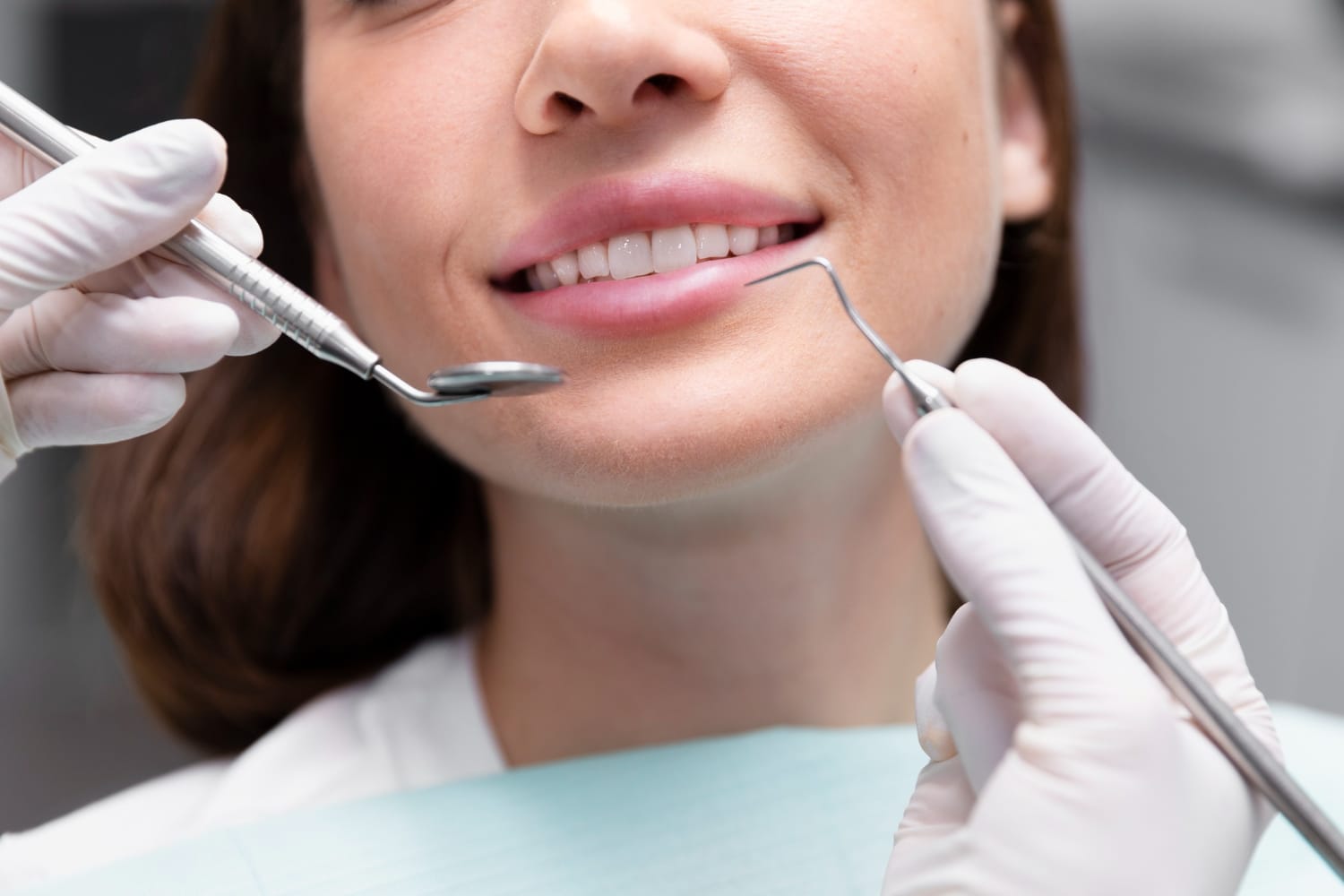
Healthy Gums
Your gums need to be free of active infection or uncontrolled gum disease
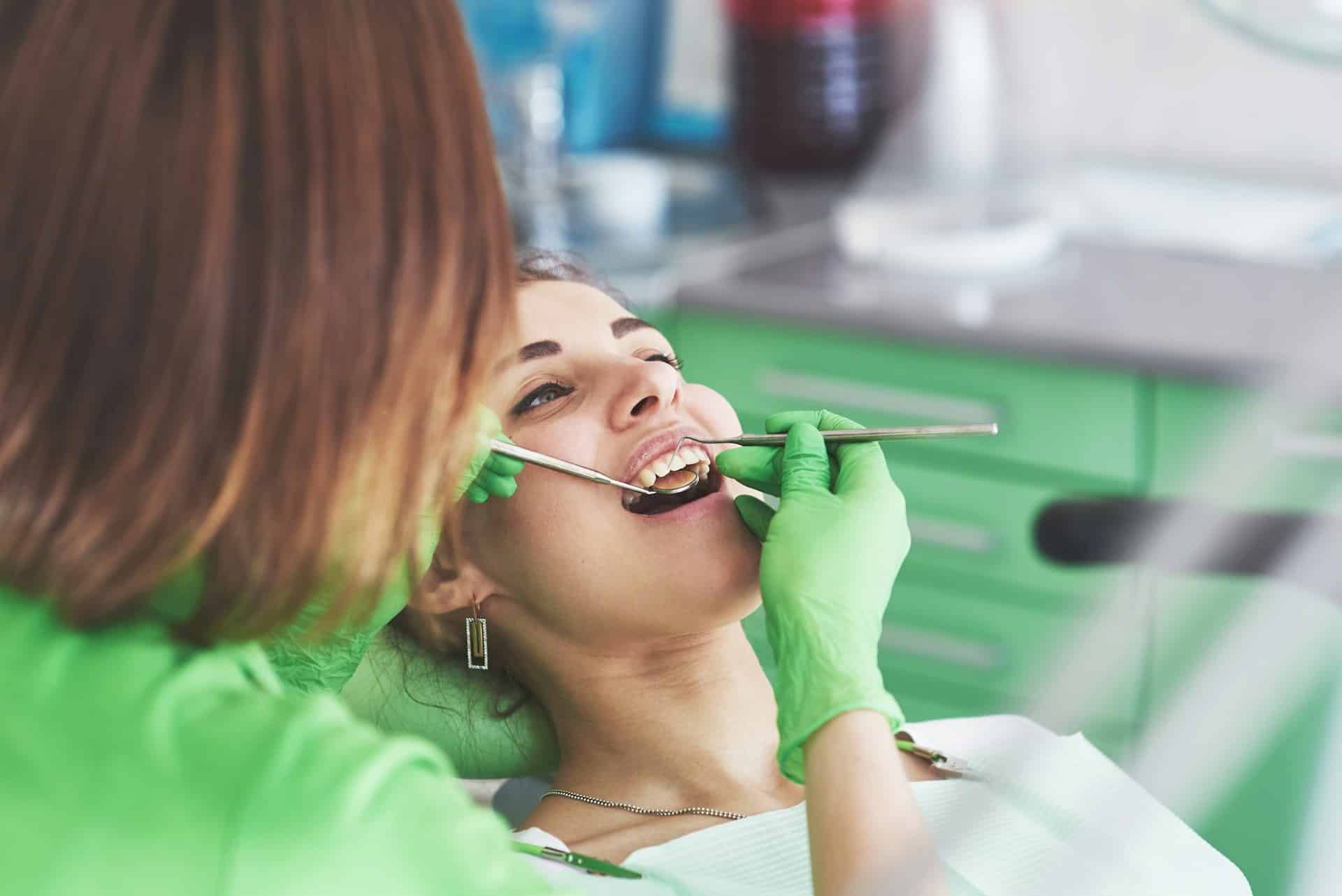
Good Overall Health
Make sure you have no conditions that severely impair healing
Not a Smoker
You shouldn’t be smoking or need to stop smoking during the healing phase
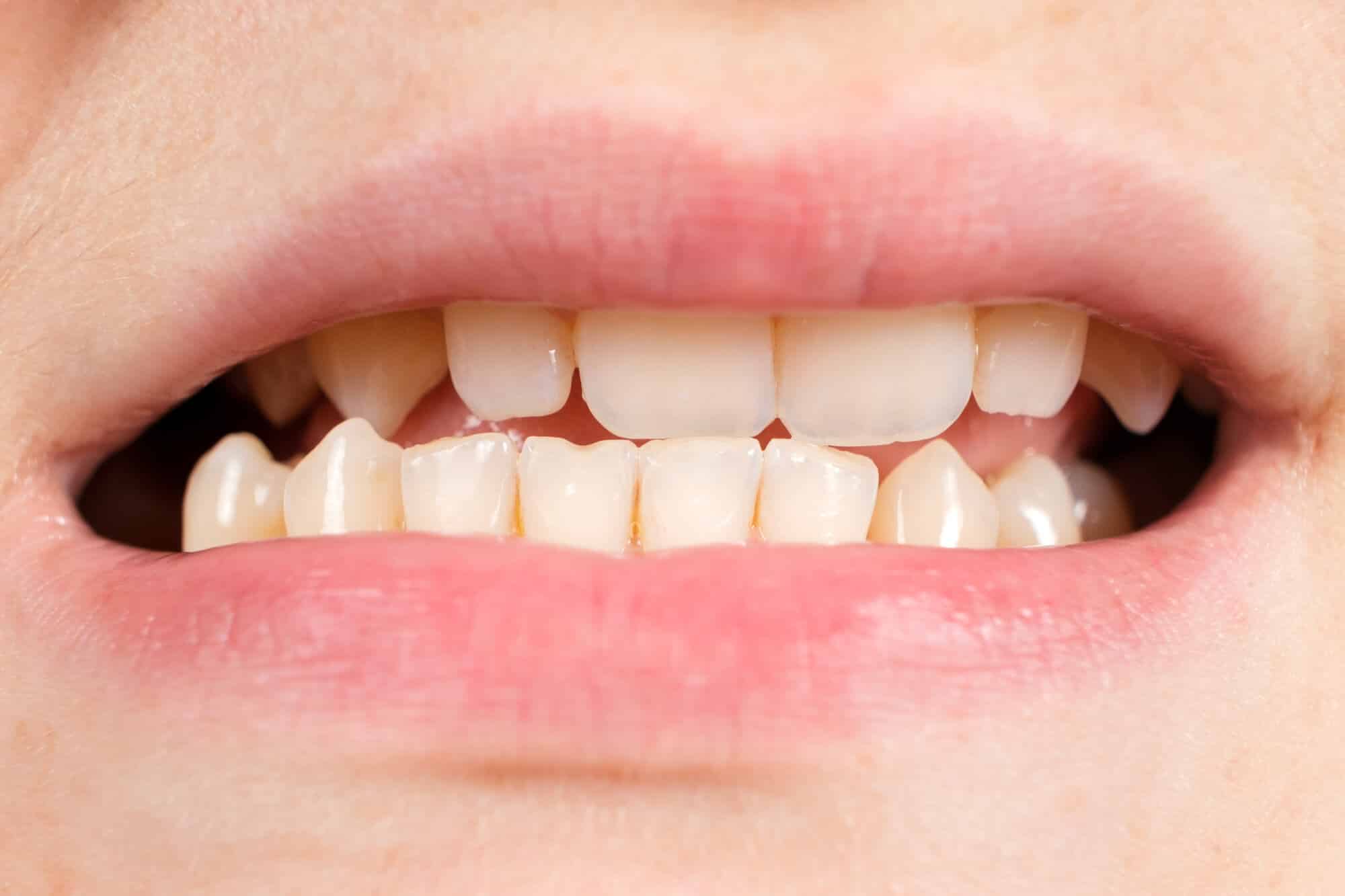
Fully developed jaw
These typically happens by the late teen years
Here is the reassurance many patients need: gum disease or previous bone loss does not automatically disqualify you. Active gum disease must be treated and brought under control before placement, but once that’s done, a great many patients who were previously turned away elsewhere are perfectly viable candidates.
We’ve spoken with patients who came to Dentique after being told “no” at another practice. In more cases than you’d expect, the “no” came from a quick X-ray, not a thorough evaluation. Dr. B’s comprehensive approach, which includes 3D cone beam CT imaging when needed, maps the full three-dimensional anatomy of your jaw. That level of detail often reveals bone volume and angulation options that a two-dimensional X-ray would miss entirely.
If you’ve been living with tooth loss and feel self-conscious about smiling or eating in public, know this: you deserve a real answer based on a real evaluation, not a dismissal based on an incomplete picture.
Bone Grafting and Sinus Lifts: When Extra Prep Is Needed
Two preparatory procedures come up frequently in implant consultations, and both deserve a clear explanation rather than a vague brush-off.
Bone grafting is the process of adding bone material to an area of the jaw that lacks sufficient volume or density to support an implant post. The graft material can come from your own body, a donor source, or a synthetic substitute. Over several months, your body integrates the material and builds new bone, creating the foundation the implant needs. Bone grafting is one of the most routine procedures in implant dentistry. Needing one doesn’t make you an unusual case. It makes you a patient with a solvable problem.
Sinus lifts address a specific anatomical challenge in the upper back jaw. The sinus cavities sit close to the roots of the upper molar region. When those teeth are lost and bone resorbs, the sinus can drop to a point where there’s not enough clearance to place an implant post without entering the sinus. A sinus lift elevates the sinus membrane and places bone graft material in the created space. Once the graft heals, there’s room for a stable implant.
According to the American Academy of Periodontology, sinus augmentation is a well-established procedure with a high rate of success when performed by a skilled clinician. Neither a bone graft nor a sinus lift means the door is closed on implants for you. It means there are additional steps before the main event.
At Dentique, thorough pre-treatment diagnostics mean patients are never blindsided mid-treatment. Dr. B reviews every finding with you upfront, explains exactly what preparation is needed, and gives you a complete timeline before a single procedure begins.
Implant dentistry is an important part of our service. Dr. Bhatnagar can perform the entire implant procedure from start to finish (from diagnosis to crown placement) right here in our office. You will be able to get your implant placed and your crown, bridge, or denture conveniently attached in one comfortable location.
We also use some of the best possible technology to make your dental implant procedure smooth and simple. We use CT scanners and surgical guides to place the implant with a higher level of precision and accuracy than would otherwise be possible.
The Dental Implant Process at Dentique: Step-by-Step
Understanding the process takes away most of the anxiety. Here is exactly what happens from start to finish.
Step 1 — Consultation and Examination
Dr. Bhatnagar reviews your complete medical and dental history, performs a clinical examination, and takes digital X-rays or a 3D cone beam CT scan to assess your bone volume, nerve positions, and sinus anatomy. This is where your candidacy is confirmed and where the real planning begins.
Step 2 — Custom Treatment Plan
Dr. B builds a personalized roadmap that covers every procedure in sequence, including any preparatory work such as extractions, bone grafting, or sinus lifts. You receive a realistic timeline and transparent pricing before anything is scheduled.
Step 3 — Implant Placement
The titanium post is placed surgically under local anesthesia. Dentique also offers sedation options for patients who feel anxious about the procedure. Most patients describe the experience as feeling pressure rather than pain. The surgery itself typically takes one to two hours depending on complexity.
Step 4 — Osseointegration / Healing Phase
This is the waiting phase, and it’s the most important one. Over three to six months, the implant post fuses with the surrounding bone. During this time, most patients wear a temporary restoration so they’re never walking around with a visible gap.
Step 5 — Abutment Placement
Once Dr. B confirms the implant has fully integrated, a small connector piece called an abutment is secured to the post. This piece forms the link between the implant and the final crown.
Step 6 — Final Crown Delivery
A custom-designed, color-matched crown is fabricated to blend seamlessly with your surrounding teeth and attached to the abutment. This is the visible part of the restoration, and at this point, the process is complete.
For most single implant cases, the full journey runs three to six months. All-on-4 full-arch cases can often be placed and temporized in a single day, with the final arch delivered after osseointegration is confirmed. Dr. B will give you a precise timeline at your consultation based on your specific case.
Dental Implant Cost in Phoenix, AZ
Transparency matters here. A single dental implant in Phoenix in 2026 typically runs between $3,000 and $5,500 all-in, depending on the complexity of the case. That range reflects the total cost, meaning the implant post, the abutment, the crown, any imaging, and the surgical fees.
Several factors push that number up or down:
- Bone grafting or sinus lift procedures, if needed, add cost and healing time
- The materials used for the post and crown affect both durability and price
- The provider’s training and experience is a real cost driver, and one worth paying for
Let’s talk about the cheap quote problem. Phoenix has no shortage of dental implant offers from high-volume chains advertising $999 implants or similar prices. Those numbers rarely reflect the all-in cost. What’s typically missing: the cost of the crown, the abutment, the imaging, and any preparatory procedures. When you add everything up, volume-chain patients often pay as much as they would have at a quality independent practice, but without the same level of diagnostic rigor, materials, or follow-up care.
At Dentique, pricing is transparent and presented in writing before treatment begins. There are no surprise fees mid-treatment.
For All-on-4 / full-arch solutions, the price range is naturally higher, typically starting around $20,000 to $30,000 per arch depending on the materials and any preparatory procedures required. When you consider that this replaces an entire arch of teeth with a fixed, permanent solution, the per-tooth math changes substantially.
Dental Implant Recovery and Aftercare: Timeline and Tips
Recovery is the part patients worry about most, and it’s almost always easier than they expect.
First 24 to 72 hours:
Mild swelling, tenderness, and some light bleeding are completely normal after implant surgery. Stick to soft foods like yogurt, smoothies, mashed potatoes, and scrambled eggs. Avoid hot liquids, straws, smoking, and vigorous rinsing. Cold packs applied to the cheek in 20-minute intervals help manage swelling.
Week 1 to 2:
Continue soft foods. No smoking, which constricts blood vessels and slows healing significantly. Keep the surgical site clean with gentle rinsing as directed, but don’t brush directly on the implant site yet. Most patients return to work within one to three days.
Months 1 to 6 (osseointegration phase):
This is the quiet phase where the real work is happening below the surface. Attend scheduled check-ins with Dr. B so she can monitor integration progress. Avoid hard or crunchy foods near the implant site. No contact sports without a mouthguard.
Long-term aftercare:
Once your final crown is in place, maintenance is refreshingly simple. Brush and floss the implant crown exactly as you would a natural tooth. Attend regular cleanings at Dentique. Come back for scheduled follow-up appointments so Dr. B can confirm the implant and surrounding tissues remain healthy. According to the National Institutes of Health, consistent oral hygiene and regular professional maintenance are the two strongest predictors of long-term implant success.
Dentique provides written post-op instructions, and every active patient has direct access to Dr. B’s personal line. If a question or concern comes up at 9pm on a Tuesday, you’re not calling a generic answering service.
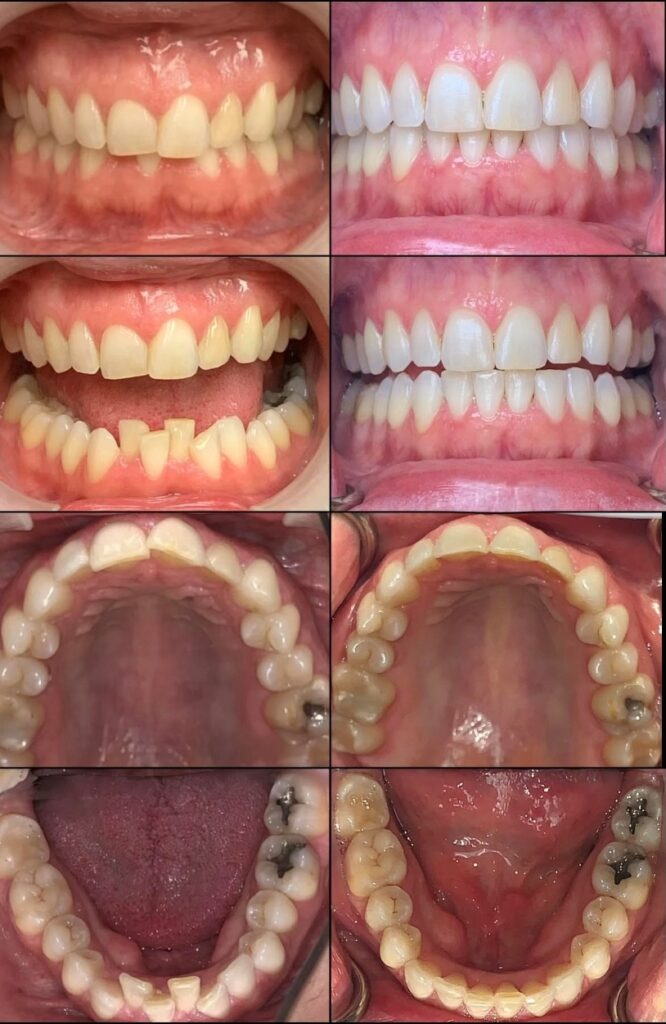
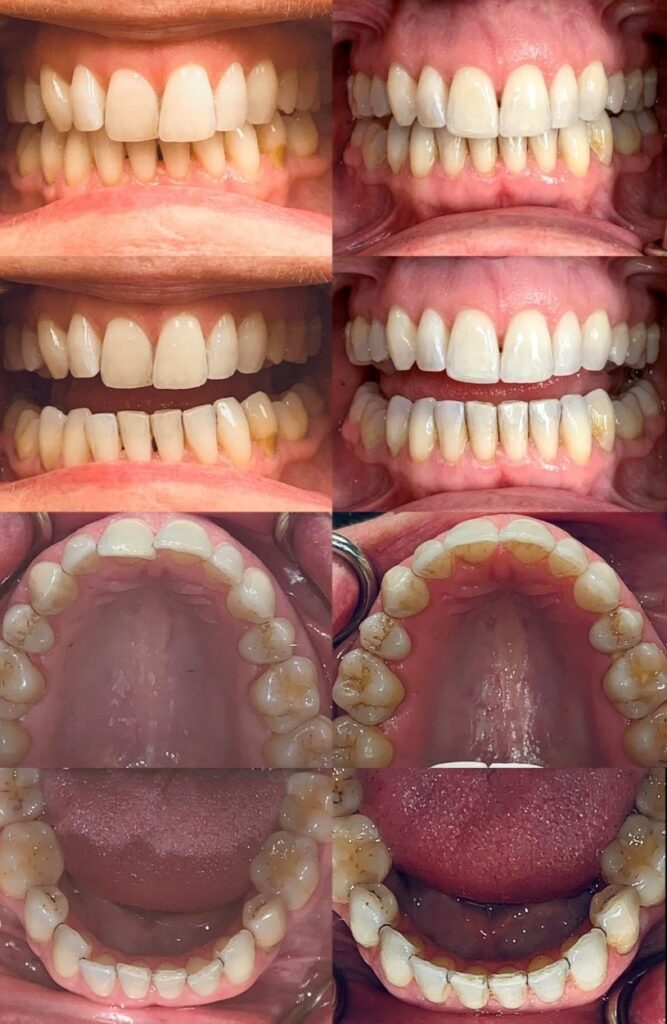
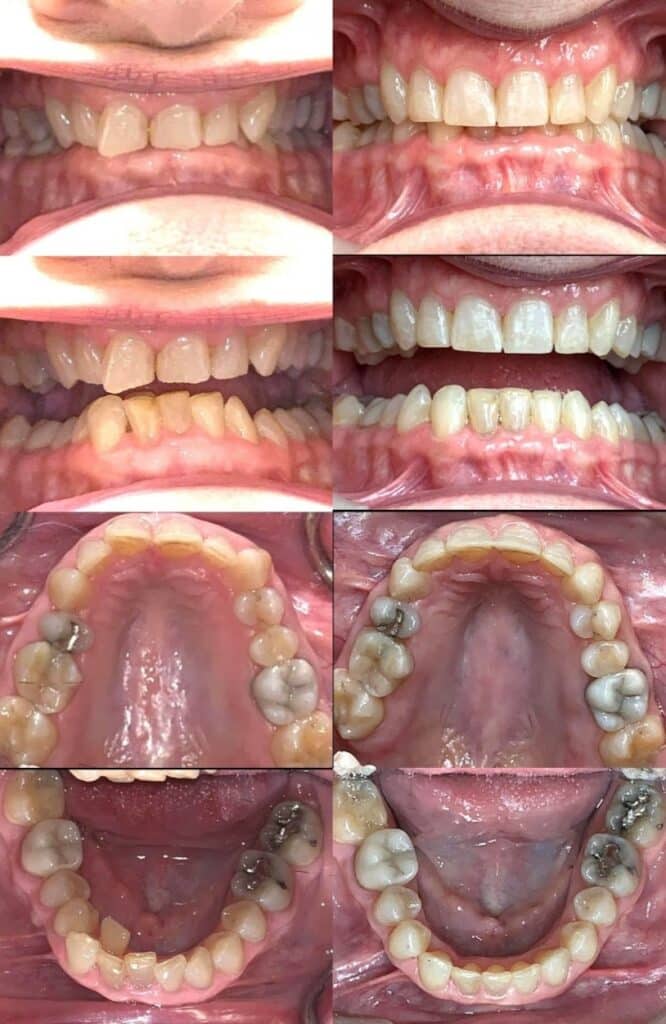
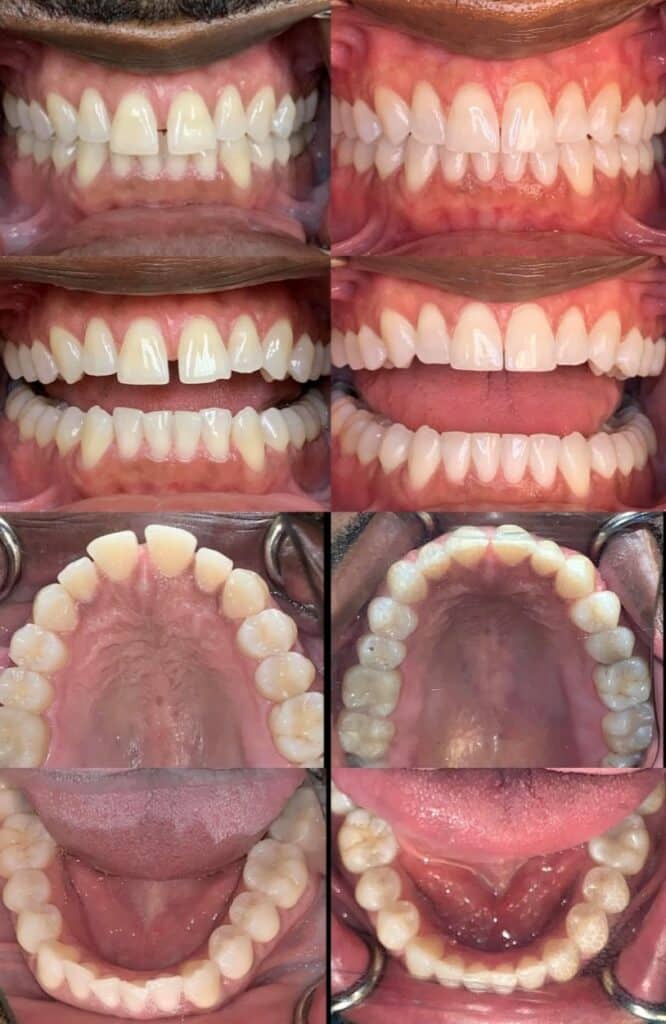
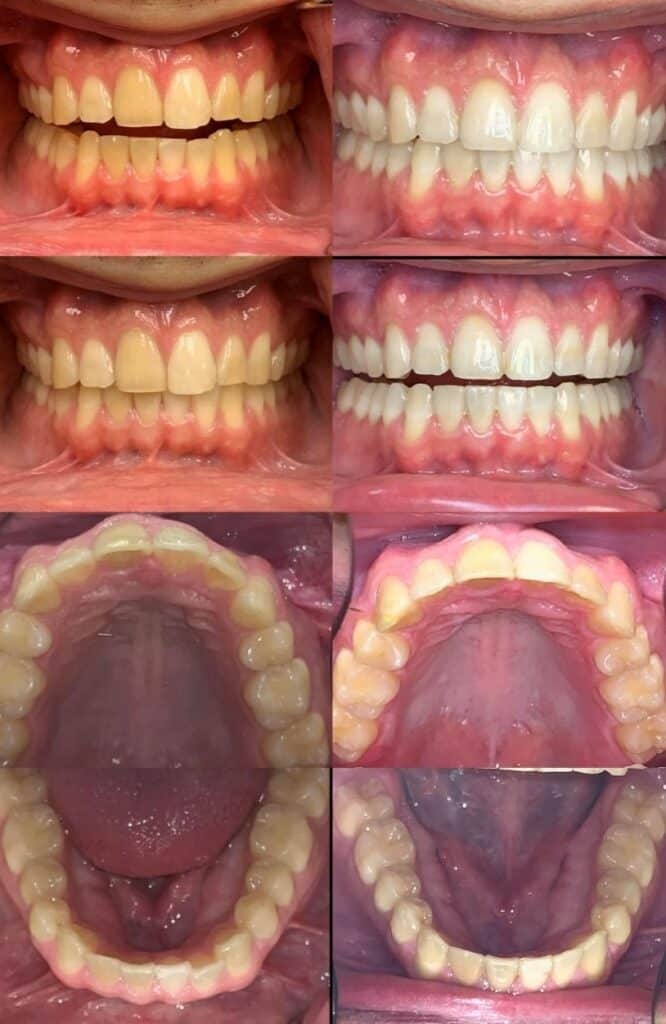
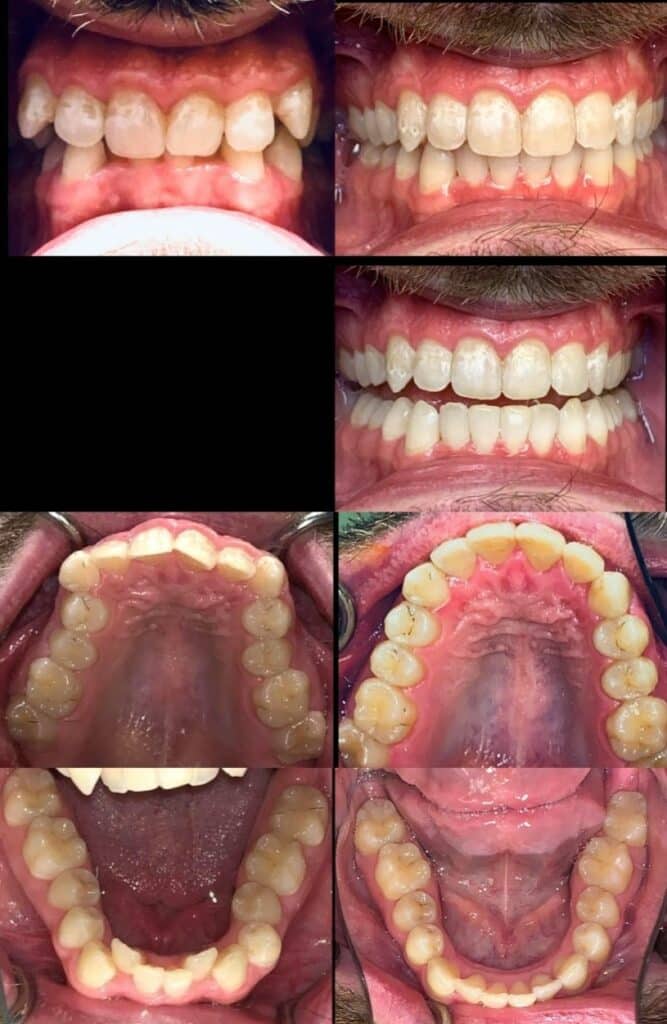
Before and After Dental Implants in Phoenix by Dentique
How much do dental implants cost in Phoenix, AZ
In Phoenix, a single dental implant typically ranges from $3,000 to $5,500 all-in, depending on the complexity of the case, whether preparatory procedures like bone grafting are needed, and the materials used. Dentique provides transparent, upfront pricing and offers flexible financing options to make implants accessible.
What if I don’t have enough bone for dental implants?
Insufficient bone is common and solvable. A bone graft — where bone material is added to the deficient area — rebuilds the foundation needed for a stable implant. For upper back teeth, a sinus lift may be required. These preparatory steps add healing time but are routine procedures at Dentique.
How long does the dental implant process take at Dentique?
Most single implant cases are fully completed in three to six months. The timeline includes consultation, implant placement, an osseointegration healing phase, and final crown delivery. All-on-4 full-arch cases can often be placed and temporized in a single day. Dr. B provides a precise, personalized timeline at your consultation.
Does Dentique offer All-on-4 or full-arch implant solutions?
Yes. Dentique offers full-arch implant solutions, including All-on-4, where an entire upper or lower arch of teeth is supported by four strategically placed implants. This is ideal for patients who are fully edentulous or have multiple failing teeth and want a permanent, fixed restoration.
How painful is the Dental Implant procedure?
Most patients are surprised by how comfortable the procedure is. It’s performed under local anesthesia, and Dentique offers sedation options for anxious patients. Post-procedure discomfort is typically mild and well-managed with over-the-counter pain relief. Most patients return to normal activities within one to three days.
Does dental insurance cover implants at Dentique?
Most dental insurance plans don’t fully cover implants, but they may cover related procedures such as extractions, bone grafting, or crowns. Dentique helps patients maximize their available benefits and offers third-party financing options so cost is not a barrier to care.
How long do dental implants last, and does Dentique offer a warranty?
With proper care, the implant post can last a lifetime; the crown may need replacement after 15 to 20 years. Dentique backs its implant work with a written warranty — a meaningful differentiator from high-volume implant chains. Dr. B stands behind her results because she treats patients as long-term partners.
Where is Dentique located, and what areas does it serve?
Dentique is located in Ahwatukee, Phoenix, Arizona, and serves patients throughout the greater Phoenix metro area, including Chandler, Scottsdale, Paradise Valley, Mesa, Gilbert, and Tempe. Extended hours on Tuesdays and Thursdays and virtual consultation options make care accessible for busy patients — including those traveling from out of state.
Can I get dental implants if I have gum disease?
Active gum disease must be treated before implant placement — uncontrolled infection can compromise implant success. Successfully treated gum disease does not disqualify you. Dentique’s thorough evaluation will assess your periodontal health and outline any treatment needed before proceeding.